
Water Engineering · Kenya
Water Engineering Companies in Kenya
Borehole design, water distribution and storage, stormwater drainage, rainwater harvesting and wastewater treatment — designed as engineering rather than assembled from parts.
- Engineering disciplines in-house
- 3
- Incorporated in Kenya
- Est. 2017
- Combined team experience
- 10+ yrs
Discuss your water project
Four fields. You'll hear back within one business day, from someone who can answer technical questions.
Registered and compliant with


Why water is its own discipline
Water problems are rarely solved by buying equipment
A development with an unreliable supply buys a bigger tank. An estate that floods buys a bigger pipe. A facility with an effluent problem buys a treatment unit. Each is a reasonable instinct and each frequently fails, because the problem was in the system rather than in the component.
Supply is a question of demand profile, yield, storage, head and distribution. Drainage is a question of catchment, intensity, capacity and where the water is allowed to go. Wastewater is a question of load, treatment process and discharge standard. All of these are calculations, and equipment sized without them tends to be either inadequate or expensively oversized.
TopHall Group has water resource engineering as one of its three in-house engineering disciplines, alongside structural and environmental. It is a service we sell in its own right, not an add-on to construction.
What we get called about
Five water problems and why they persist
Most of these have been 'solved' once or twice before we are called.
A borehole that does not deliver
Yield, drawdown, pump selection and storage all have to match. A borehole sized without a demand profile will disappoint at the worst time of year.
Pressure that fails at the far end
Distribution across a scheme or estate is a head and friction calculation. Pipe diameter chosen by habit produces the upper units washing and the lower ones waiting.
Flooding that arrived with development
Roofs and hardstanding turn rainfall into runoff. Drainage sized for the original site will not carry what the developed site now sheds.
Septic systems failing early
Soakage depends on soil percolation and water table. On black cotton soil a conventional system will fail, and no amount of size fixes the mechanism.
Harvesting that stores the wrong amount
Rainwater storage sized without the rainfall pattern and the demand either overflows most of the year or runs dry in the dry season.
What we design
Water, from source to discharge
Available as design only, or designed and delivered.
Borehole & Water Supply Design
Siting, yield assessment, pump and storage sizing matched to an actual demand profile.
Distribution & Storage
Reticulation, pressure zones, tank sizing and pumping for estates, institutions and developments.
Stormwater & Drainage
Catchment analysis, drainage capacity, detention and discharge designed against the developed site.
Wastewater & Treatment
Septic systems, treatment processes and effluent handling designed for the load and the discharge standard.
Environmental Compliance
EIA and environmental management plans for water and effluent works that trigger a NEMA requirement.
How a water project runs
From problem to working system
Six stages, starting with measurement rather than a product.
Define the demand
Who uses the water, how much, when, and what happens when supply fails.
Site & source assessment
Available sources, ground conditions, levels, soil percolation and where discharge can legally go.
Options & sizing
Two or three approaches sized and costed against each other rather than one recommendation.
Detailed design
Layouts, pipe sizing, pump selection, tank capacities, structures and the drawings to build from.
Construction
Installation with inspection of levels, falls and connections before anything is covered over.
Commissioning
Tested under load, with operating information handed over so the system can be maintained.
Why TopHall
Water engineers, not water suppliers
The distinction shows in what gets recommended.
No equipment to sell you
We are not a distributor for a pump or tank brand, so the sizing follows the calculation rather than the stock list.
Designed against your actual demand
Demand profile first, then the system. It is the step most often skipped, and the reason so many installations disappoint.
Civil and structural in the same practice
Tanks, towers, chambers and treatment structures need structural design. Here that is the same team.
Environmental compliance included
Effluent and discharge works frequently trigger a NEMA requirement. EIA is one of our services, so it is handled rather than referred.
Design available on its own
You can take the design and have it installed by anyone. We will also inspect the installation if you want it checked.
Our work
Civil works on site
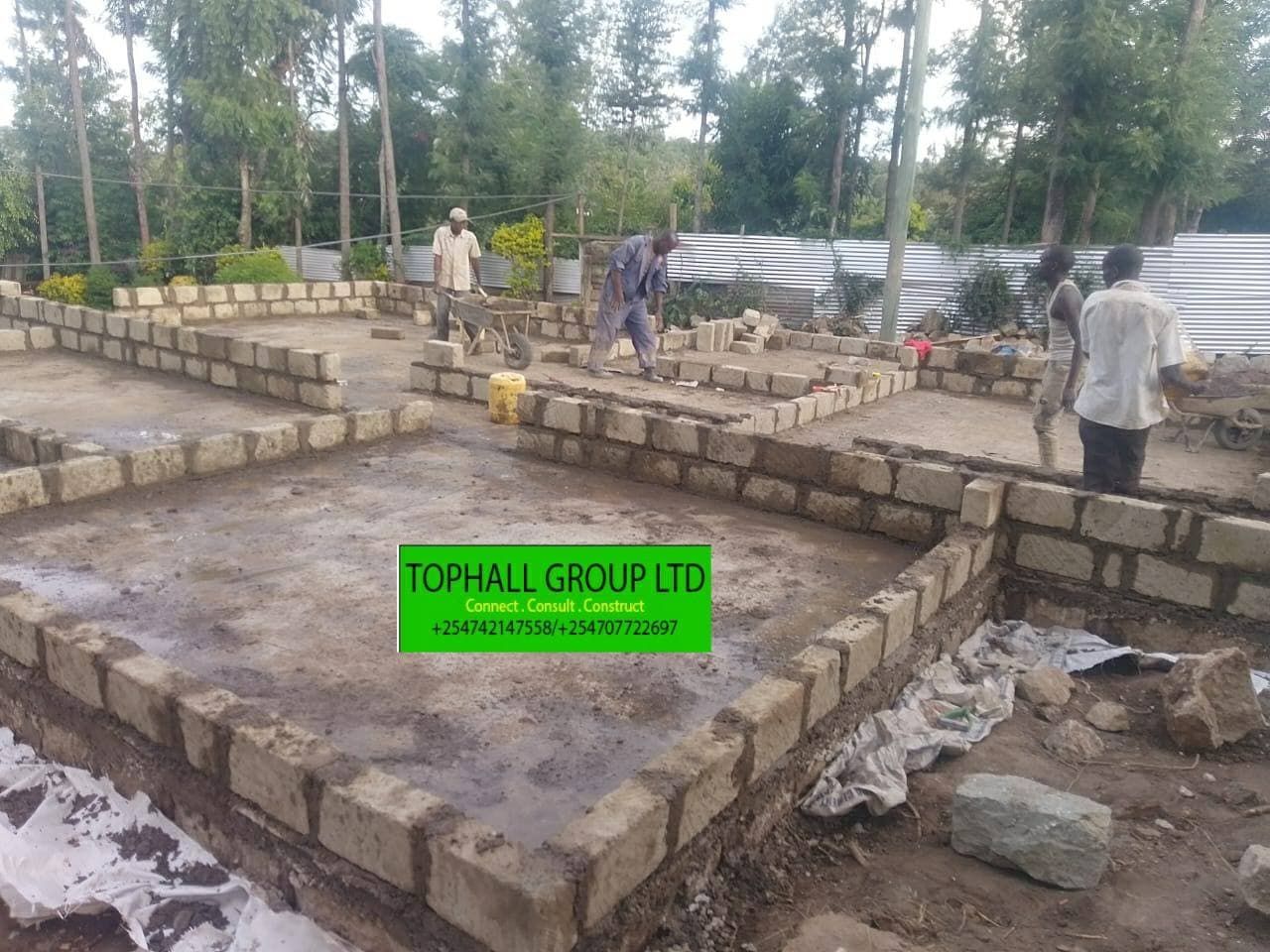
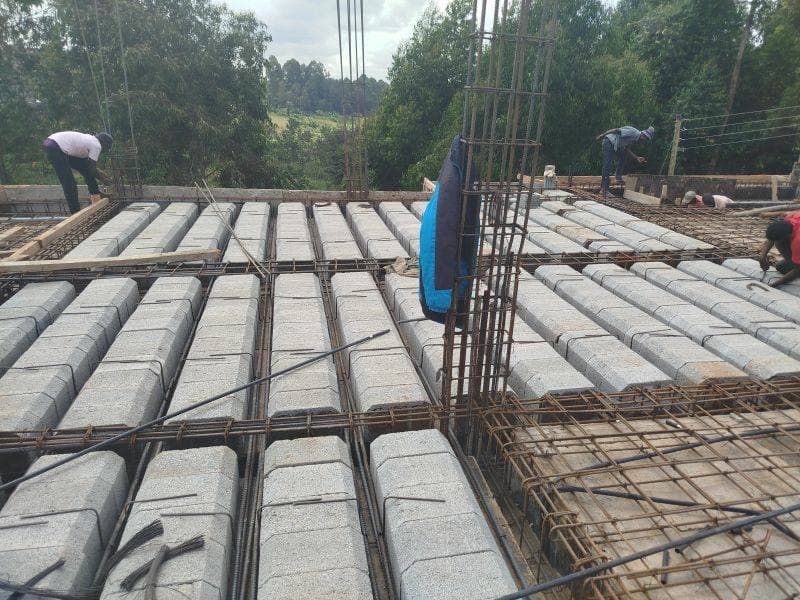
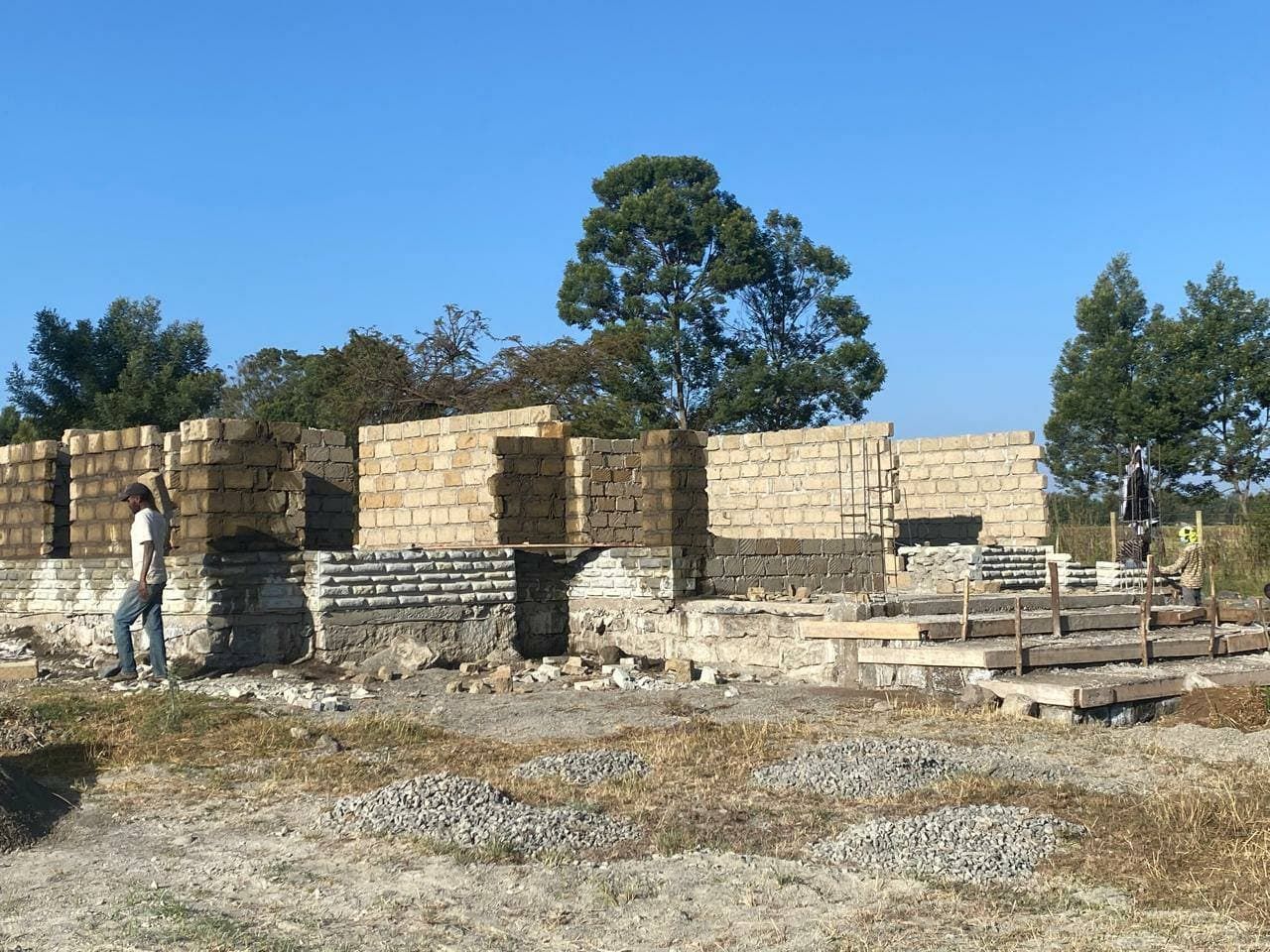
Photographs from TopHall sites showing the civil construction water systems depend on. Each is captioned for what it is.
 Site photograph
Excavation and stone foundations — the same civil works that underpin tanks, chambers and treatment structures.
 Site photograph
Reinforced concrete construction, as used for water-retaining and supporting structures.
 Site photograph
Structural masonry on a TopHall site.
Before you call
What clients ask about water engineering
We already have a borehole but the supply is unreliable. Can that be fixed?
Usually, once the cause is identified. Unreliable supply from an existing borehole is generally one of four things: the yield is genuinely lower than the demand, the pump is mismatched to the head and flow, the storage is too small to buffer peak demand, or the distribution is losing pressure. Those are different problems with different fixes, and the first job is measuring which one you have rather than replacing the pump and hoping.
Do you drill boreholes?
We design borehole and water supply systems — siting, yield assessment, pump and storage sizing, and the distribution — and we supervise the drilling and installation. The drilling itself is carried out by specialist drilling contractors. Having the design and supervision independent of the drilling contractor is worth something, because it means the person assessing the yield is not the person selling you the metres.
Will my water project need NEMA approval?
It can, particularly where effluent or wastewater discharge is involved, and for water abstraction there are separate permitting requirements. We establish which apply to your project at the assessment stage rather than after design, and environmental impact assessment is one of our own services so the statutory work is programmed alongside the engineering.
Have a water problem to solve?
Describe the site and what is going wrong. We will tell you whether it is a sizing problem, a design problem or something else entirely.
Prefer to talk now? Call +254 742 147 558.