
Quantity Surveying · Nairobi
Quantity Surveyors in Nairobi
Cost estimation, measured bills of quantities, tender documentation, valuations and value engineering — the documents that turn a construction budget into something you can defend.
- Incorporated in Kenya
- Est. 2017
- Service lines under one contract
- 7
- Combined team experience
- 10+ yrs
Get your project measured
Four fields. You'll hear back within one business day, from someone who can answer technical questions.
Registered and compliant with



Why measurement matters
A rate per square metre is a rumour. A bill of quantities is a document
Ask three contractors in Nairobi what a building costs per square metre and you will get three numbers, none of them wrong and none of them comparable. They are pricing different foundations, different finishes and different assumptions about what you meant, and there is no way to tell which from the total.
A bill of quantities removes that. It lists what the building is made of, in measured quantities, taken from the drawings. Every contractor prices the same list. The differences between their quotes become visible and explainable rather than mysterious.
It also does the work that matters after the contract is signed. Variations get measured against it. Valuations get certified against it. And when someone claims the substructure cost more than expected, there is a document that says how much substructure there was.
What a QS is called in for
Five cost problems that measurement solves
Most of these arrive as a feeling that something is wrong and no way to prove it.
Quotes you cannot compare
Three prices for three different buildings. Issue every contractor the same measured bill and the comparison becomes arithmetic instead of instinct.
A budget with no basis
A figure from a friend's project or a rate from a website is not a budget, it is a hope. Measured quantities give you a number you can plan around.
Variation claims you cannot check
Without an original measured document, every claim is unanswerable. With one, a variation is the difference between two measurements.
Paying ahead of the work
Valuations certified against what was invoiced rather than what was measured is how projects end up 80% paid and 60% built.
Cutting the wrong things to save money
Value engineering without measurement removes what is visible rather than what is expensive. Measured cost tells you where the money actually is.
What we produce
Quantity surveying, as a standalone appointment
You do not need to be building with us to have your project measured.
Bill of Quantities
Measured quantities taken off your drawings, itemised so every contractor prices exactly the same scope.
Cost Estimates & Budgets
Early-stage estimates for feasibility, and developed cost plans as the design firms up.
Tender Documentation
The document set that lets you run a fair tender and compare returns on a like-for-like basis.
Valuations & Variation Control
Interim valuations measured on site, and variations priced against the original bill before they are instructed.
Value Engineering
Identifying where the cost genuinely sits and what can be changed without damaging what the building has to do.
How it works
From drawings to a measured bill
Six steps. Most measurement appointments are quicker than clients expect.
Send the drawings
Whatever exists — architectural, structural, or a concept sketch if that is the stage you are at.
Scope & completeness check
What the drawings cover, what they do not, and what has to be assumed and recorded as an assumption.
Taking off
Quantities measured element by element: substructure, frame, walling, roofing, finishes, services and externals.
Pricing & the bill
Rates applied against current Nairobi market pricing, issued as a priced bill and a summary by element.
Review with you
Where the money is, which elements are driving it, and what the realistic options are if it is too high.
Tender or build
Issue to contractors for pricing, or use as the control document through construction.
Why TopHall
Measurement by people who also design and build
It affects what the bill captures.
Drawings read as an engineer reads them
A bill measured by someone who understands the structural design catches what is missing from the drawings, not just what is on them.
Rates from live Nairobi projects
Pricing informed by what materials and labour actually cost here now, because we are buying them on our own sites.
Value engineering that is engineering
Options assessed structurally as well as financially, so a saving does not quietly become a performance problem.
Independent of your contractor
Where we are not building, we have no interest in any particular number. The measurement is the measurement.
Available for a single document
One bill of quantities, one valuation check, one variation assessment. You are not obliged to bring us the project.
Our work
What gets measured
Photographs from TopHall sites and a structural visualisation produced by our team. Each is captioned for what it is.
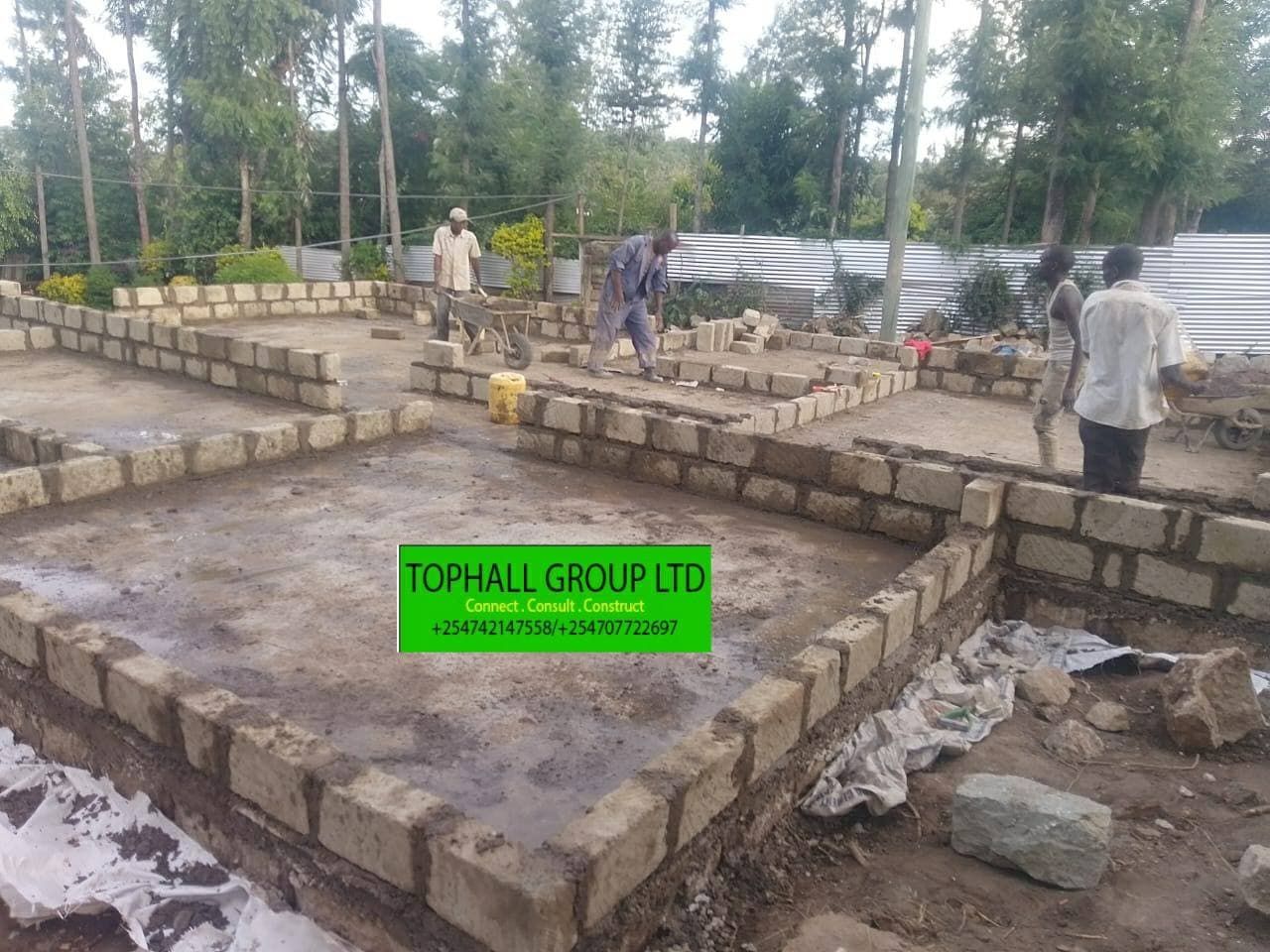 Site photograph
Substructure — stone, excavation and concrete, the element where measurement errors cost the most.
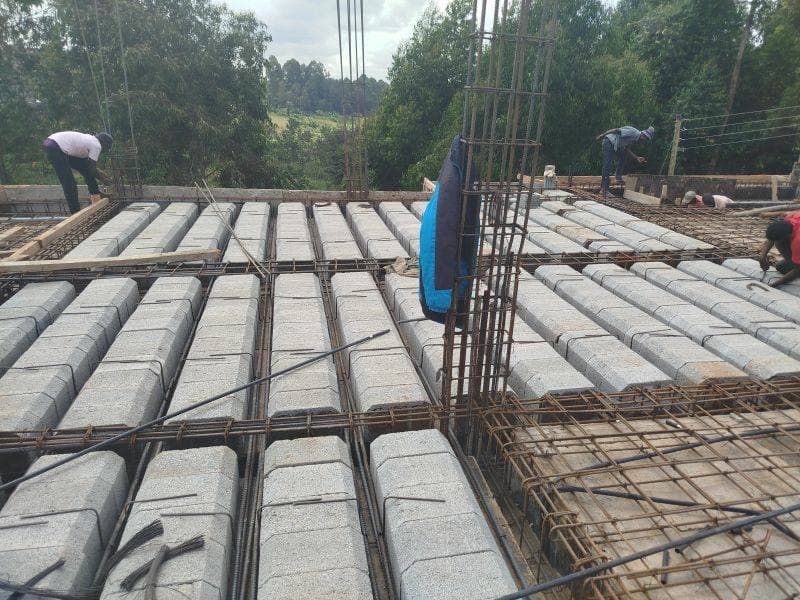 Site photograph
Suspended slab: concrete, formwork and reinforcement, each measured separately in the bill.
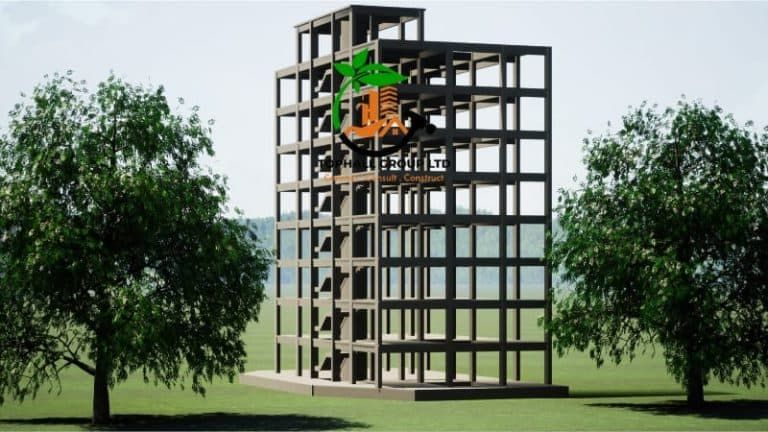 Design visualisation
The structural design that quantities are taken off.
Before you call
What clients ask a quantity surveyor
What do you need in order to measure my project?
Architectural and structural drawings, and a specification or at least an indication of finish level. The more complete they are, the more precise the bill and the fewer assumptions it has to record. If your drawings are incomplete we can still produce a budget estimate — it will simply carry stated assumptions, and we will list them so you know exactly what is and is not certain.
Can you check a contractor's quote or claim for me?
Yes. If a bill of quantities exists we measure the claim against it and tell you what is properly due. If none exists, we can measure the work independently from the drawings and from site, which is slower but still gives you a defensible position. This is worth doing before payment rather than after, because recovering an overpayment is considerably harder than declining one.
Will a bill of quantities actually save me money?
Usually, in two ways. Competitive tendering against a common document typically produces better pricing than negotiating against a single contractor's own figure. And through construction it removes the ambiguity that variations grow in. What it will not do is make a building cheaper to construct — it makes the cost visible and controllable, which is a different and more useful thing.
Need a number you can rely on?
Send us the drawings and we will tell you what measuring them involves and what it costs. If the drawings are not ready to measure, we will say that too.
Prefer to talk now? Call +254 742 147 558.