
Contractor Classification · Kenya
NCA Building Contractor Classes: What Your Project Needs
The registration class a contractor holds determines the value and type of works they may undertake. Here is how the classes work, which one your project requires, and how to verify it.
- Incorporated in Kenya
- Est. 2017
- Service lines under one contract
- 7
- Engineering disciplines in-house
- 3
Ask about your project
Four fields. You'll hear back within one business day, from someone who can answer technical questions.
Registered and compliant with



Getting the question right
The class you need depends on your project, not on who sounds biggest
The National Construction Authority registers building contractors in classes, and those classes carry limits on the value and category of works a contractor may undertake. Class 1 sits at the top and is unrestricted by value; the classes below it carry progressively lower ceilings.
That means the correct question is not 'who is Class 1' but 'what class does my project require, and does this contractor hold it'. Appointing a contractor whose class does not cover your contract value is a compliance problem regardless of how capable they are — and appointing a Class 1 firm for a project well inside a lower class buys you nothing except, frequently, a higher price.
We would rather tell you how to establish that than claim a class on a web page. Ask us for our registration details and verify them against the requirement for your specific project. That is a better basis for a decision than any headline.
Where class requirements catch people out
Five things people get wrong about contractor classification
All of them are avoidable with one phone call to the Authority.
Assuming a higher class means better work
Class reflects the value and category of works a contractor is permitted to undertake. It is a permission, not a quality rating, and it says nothing about supervision or cost control.
Not knowing which class the project needs
The requirement follows from the contract value and the category of works. Establish it first, then shortlist — not the other way round.
Taking a certificate at face value
Registrations lapse and certificates circulate. Verify the details directly with the Authority rather than accepting an image.
Splitting a contract to fit a lower class
Dividing works to bring them under a ceiling is a compliance risk, and it fragments accountability on your site at the same time.
Ignoring who actually carries out the work
A correctly classified main contractor can still subcontract to parties who are not. Ask who is physically on site.
What we actually do
The capability, separate from the classification
Judge these on their own terms — then verify the registration separately.
Building Construction
Residential, commercial and mixed-use works from substructure through to finishes and external works.
Architectural & Structural Design
Reinforced concrete and steel design to Kenyan building codes, issued as construction drawings.
Bill of Quantities & Tendering
Measured documentation for tendering, budgeting and controlling variations through the contract.
Project Management
Programme, procurement, cost control and quality inspection, including on projects others are building.
Feasibility Studies
Technical, financial and environmental viability established before commitments are made.
How to get this right
Six steps to the correct contractor classification
Do these in order and the class question resolves itself.
Establish the contract value
A measured bill of quantities gives you a real figure. The class requirement follows from it.
Identify the works category
Building works, civil works and specialist categories are registered separately. Confirm which your project falls under.
Confirm the class required
Check the requirement with the National Construction Authority for your value and category, in writing.
Request registration details
Ask each shortlisted contractor for their registration details rather than a certificate image.
Verify independently
Confirm the details and their current status with the Authority directly before you sign anything.
Check the subcontractors too
Establish who will actually carry out the works and whether they are registered for what they are doing.
Why TopHall
What you can verify about us
All of it checkable, none of it asserted.
Registration details on request
Ask and we will give you our details in writing so you can verify them with the Authority yourself. We would rather you checked than took our word.
A registered company with a real address
Incorporated in Kenya in 2017, operating from Applewood, 10th Floor, off Ngong Road, Nairobi.
Engineering disciplines in-house
Structural, environmental and water engineering are our own, which is a capability question rather than a classification one.
Measured pricing
Quantity surveying is one of our service lines, so the contract value your class requirement is based on is itself measured.
We will tell you if a project is outside our scope
If your project needs something we cannot properly undertake, saying so is cheaper for both of us than finding out later.
Our work
Construction on TopHall sites
Photographs from our own sites and a structural visualisation by our team. Each is labelled for what it is.
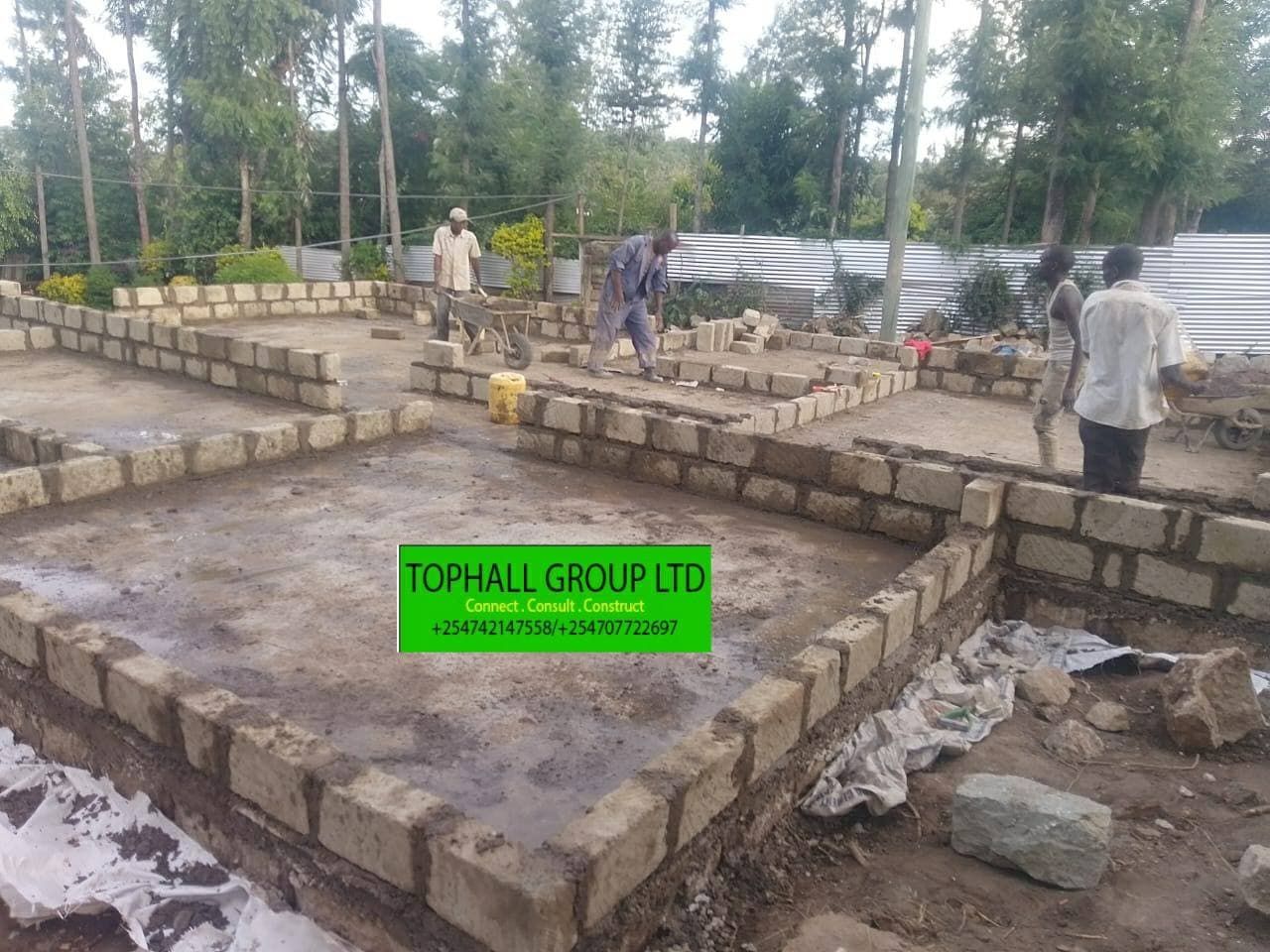 Site photograph
Substructure works set out and coursed on a TopHall site.
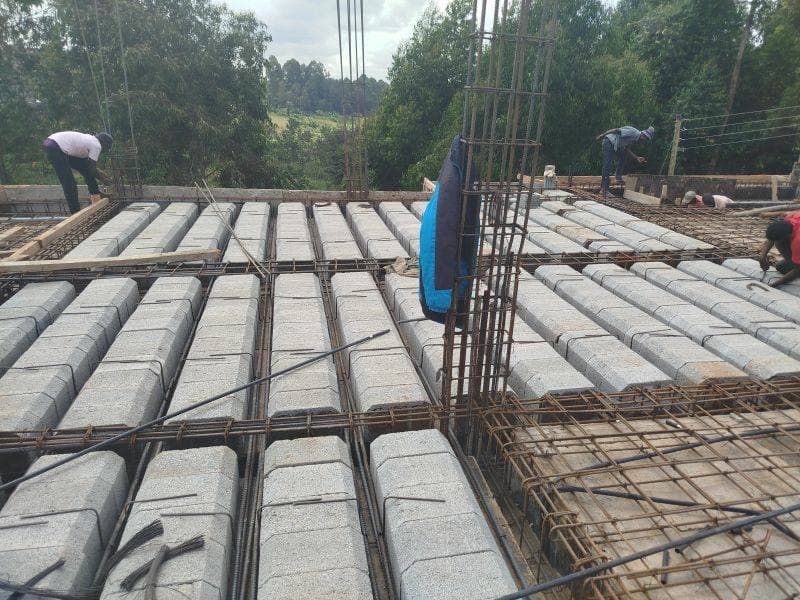 Site photograph
Suspended slab with reinforcement inspected before the pour.
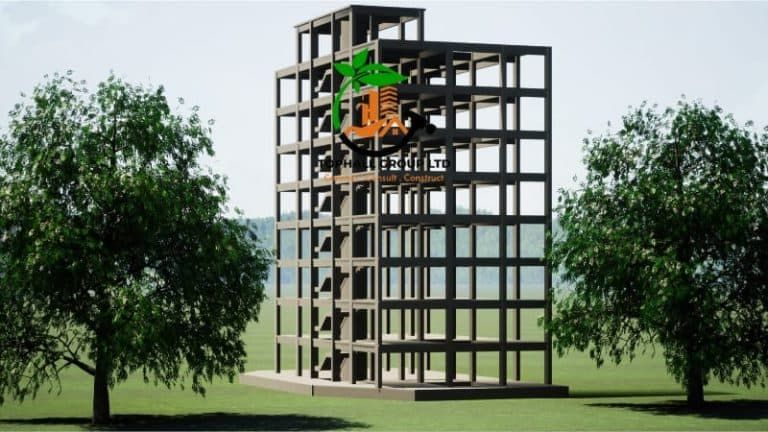 Design visualisation
Multi-storey reinforced concrete frame at design stage.
Before you call
What people ask about NCA classes
What class of contractor does my project need?
It follows from the value of the contract and the category of works — building, civil or a specialist category. The most reliable route is to establish the contract value from a measured bill of quantities, then confirm the corresponding class requirement with the National Construction Authority directly. We can help you establish the first part; the second should come from the Authority rather than from any contractor, including us.
Which class is TopHall Group registered in?
Ask us and we will give you our current registration details in writing so you can verify them with the Authority. We deliberately do not publish a class on a web page — registrations change, published claims go stale, and a figure you have verified yourself is worth considerably more to you than one we have typed.
Can a lower-class contractor work on a larger project?
Not beyond the limits their class permits. Arrangements that attempt to work around this — splitting a contract into portions that each fall under a ceiling, or fronting for another firm — create compliance exposure for the client as well as the contractor, and they fragment responsibility on your site. If the project genuinely requires a higher class, the answer is to appoint a contractor who holds it.
Not sure what class your project requires?
Tell us the scope and rough value. We will tell you how the requirement is determined and give you our registration details to check.
Prefer to talk now? Call +254 742 147 558.