
Feasibility Studies · Kenya
Construction Feasibility Studies in Kenya
Technical, financial, environmental and economic viability assessed before design fees are committed — by engineers who will tell you when a project does not work.
- Incorporated in Kenya
- Est. 2017
- Service lines under one contract
- 7
- Engineering disciplines in-house
- 3
Commission a feasibility study
Four fields. You'll hear back within one business day, from someone who can answer technical questions.
Registered and compliant with



The decision before the project
The most valuable study is the one that stops a bad project
A feasibility study is usually commissioned to confirm a decision that has already been made emotionally. That is understandable and it is also the reason so many of them are worthless: a study written to justify a scheme will always find a way to justify it.
A useful study does the opposite. It tests the scheme against the three things that actually determine whether it can proceed — what the site physically supports, what the regulations permit, and what the numbers do — and it reports what it finds, including when what it finds is that the project should not go ahead in its current form.
TopHall Group provides feasibility studies as one of its seven service lines. Because the structural, environmental and water engineering are in-house, the technical half of the study is done by people who would have to design the thing, which tends to produce more honest answers about whether it can be built.
What a study is for
Five ways projects fail before anyone notices
All five are visible at feasibility stage and expensive at every stage after.
A site that will not carry the scheme
Bearing capacity, water table and slope can make the intended density unaffordable in foundations alone. That is a ground question, answered early or paid for late.
Development control that does not permit it
Plot ratio, ground coverage, setbacks and parking requirements frequently constrain a scheme well below what the owner assumed.
An environmental requirement nobody screened for
Whether the project needs a NEMA licence, and how long that takes, belongs in the feasibility programme rather than in month four.
Numbers built on a construction cost that was a guess
A financial model is only as good as its build cost. Measured cost input is what separates a model from an aspiration.
No comparison against the alternatives
The question is rarely 'does this work' but 'is this the best use of this site'. A study that tests only one scheme cannot answer that.
What a study covers
Four kinds of viability, tested together
Scoped to the decision you are actually making.
Technical Viability
What the ground, the levels, the access and the services will physically support on that specific site.
Cost & Financial Viability
Construction cost built from measured quantities rather than rates, fed into the returns model.
Environmental Screening
Whether the project triggers an EIA requirement, what type, and what that means for the programme.
Options Testing
Two or three schemes tested against each other so the recommendation compares alternatives rather than defending one.
Programme & Risk
A realistic timeline including approvals, and the specific risks that would move the cost or the date.
How a study runs
Six stages to a defensible answer
Usually weeks rather than months, and far cheaper than the decision it informs.
The question
What you are actually deciding — whether to buy, whether to build, or which of two schemes to pursue.
Site investigation
Ground conditions, levels, access, existing services and the physical constraints of the plot.
Regulatory review
Zoning and development control, approval route, and environmental screening.
Options & costing
Scheme alternatives sized and costed from measured quantities, not from rates per square metre.
Financial modelling
Cost, programme, revenue and sensitivity — what happens to the return if the build cost moves ten percent.
Recommendation
A clear answer with the reasoning shown, including the conditions under which it would change.
Why TopHall
A study you can rely on to be unwelcome
That is the only kind worth paying for.
We will recommend against a project
If the ground, the regulations or the numbers do not support the scheme, the study says so. A feasibility study that never returns a no is a marketing document.
Cost input from measured quantities
Quantity surveying is our own service line, so the construction figure in the model comes from measurement rather than from a rate someone quoted.
Technical assessment by the people who would build it
Structural, environmental and water engineering in-house means the buildability answer is a real one.
Environmental screening included
Whether the project needs a NEMA licence, and how long that adds, is established in the study rather than discovered later.
No obligation to appoint us afterwards
The study stands on its own. Taking us on for the design or the build is a separate decision entirely.
Our work
From viability to built work
A design visualisation produced by our team and photographs from TopHall sites, each captioned for what it is.
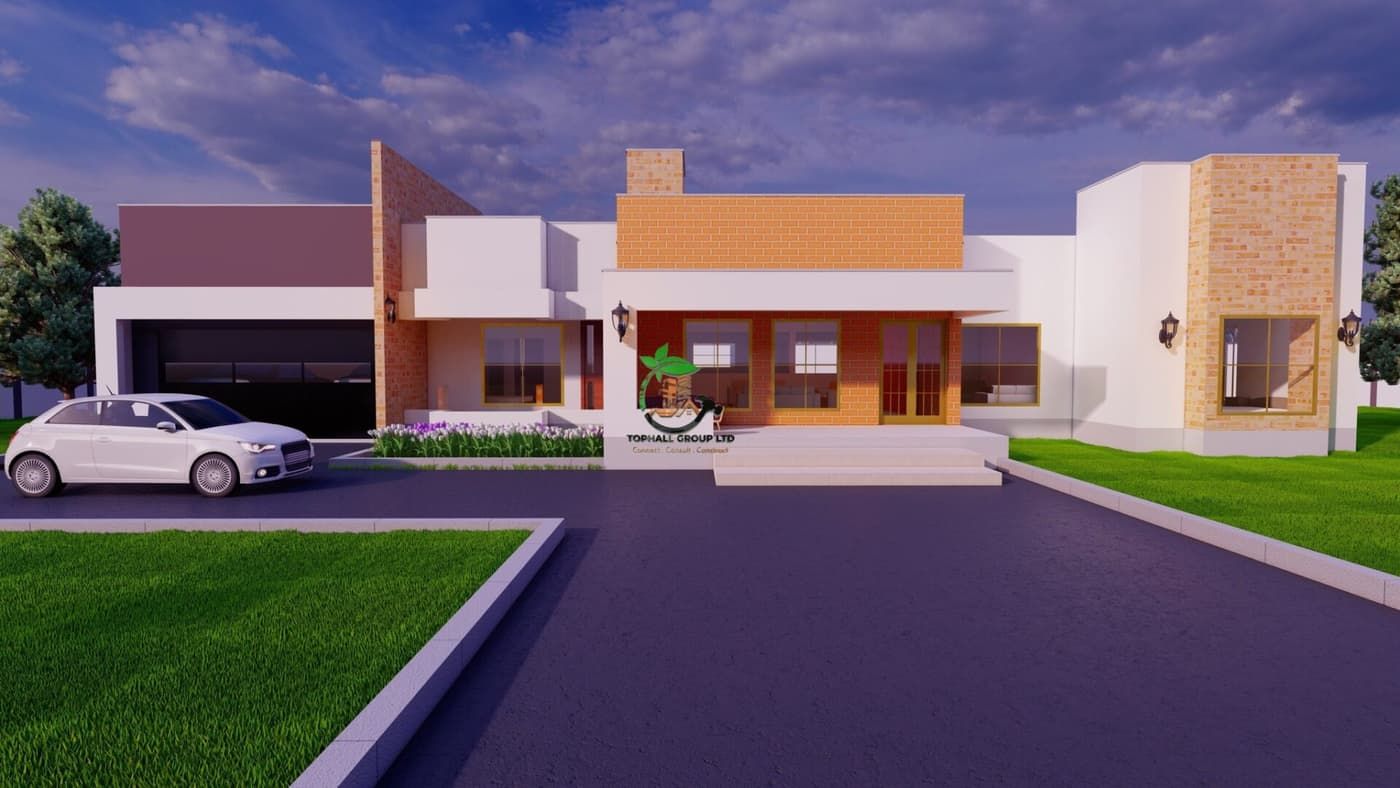 Design visualisation
A scheme at design stage — the point a feasibility study exists to reach a decision about.
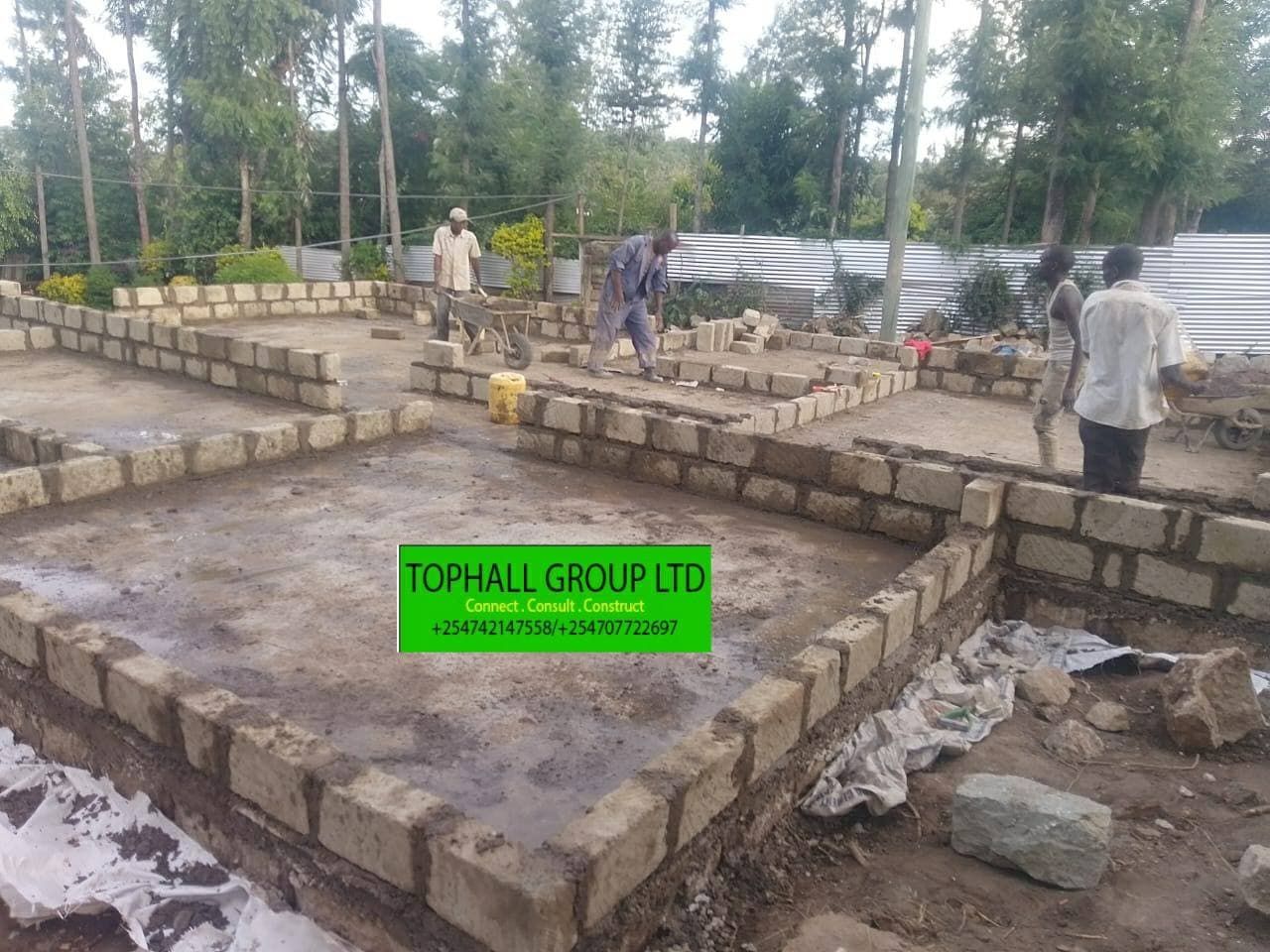 Site photograph
Substructure works, where an optimistic feasibility assumption about ground conditions becomes expensive.
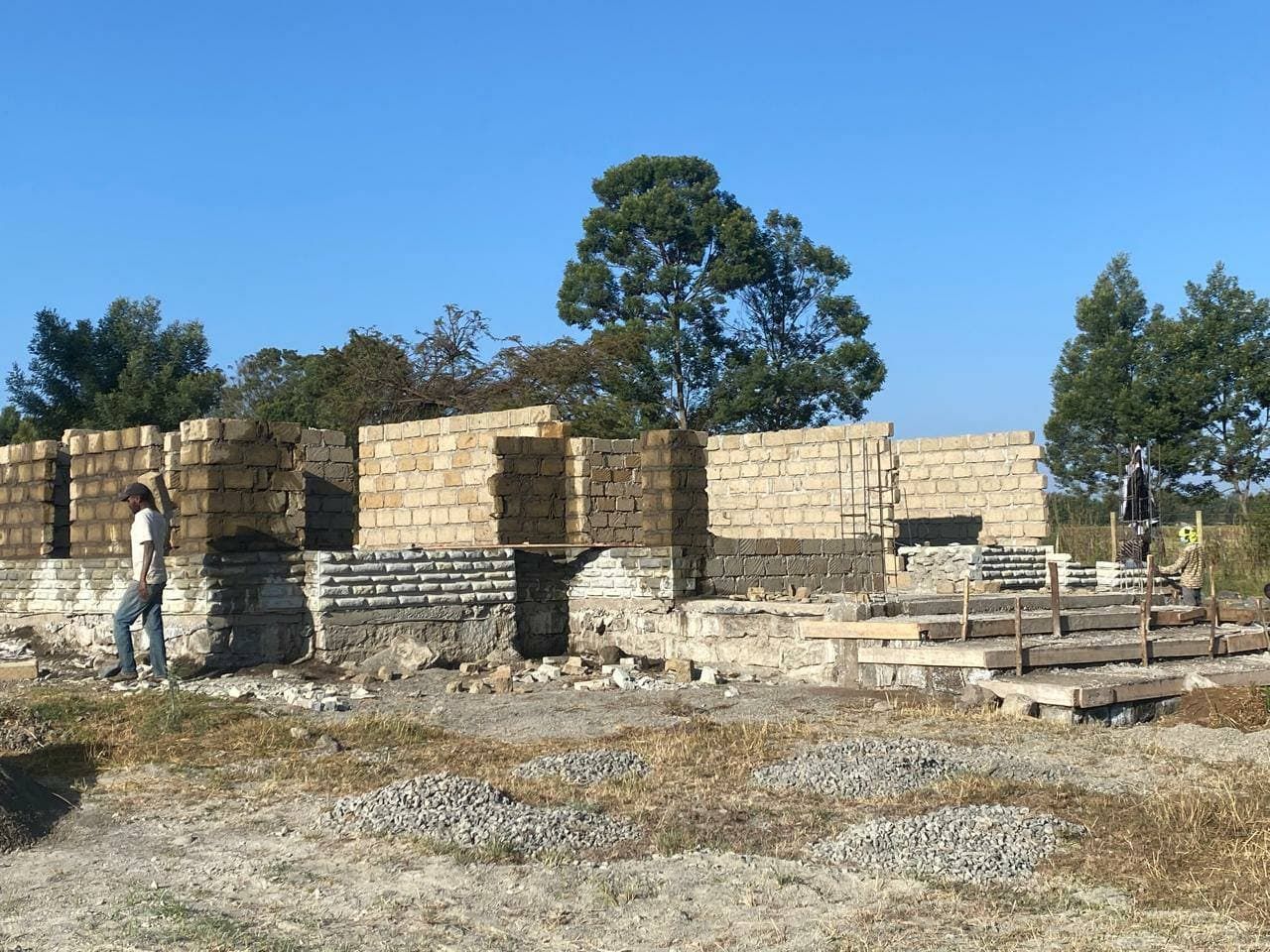 Site photograph
Construction under way on a TopHall site.
Before you call
What clients ask about feasibility
Can you do a study on land I have not bought yet?
Yes, and that is frequently the best time to commission one. Establishing what a plot can support, what the zone permits and what the development would cost before you commit to the purchase is exactly the decision a feasibility study exists to inform. We would need access to walk the site, and any title or survey information you have.
How long does a feasibility study take?
Typically a few weeks. The variable is usually ground investigation and how quickly development control information can be confirmed for the zone. We will give you a date at the outset, and if the answer to your question turns out to be obvious early — a constraint that rules the scheme out — we will tell you then rather than completing the full study first.
What if the study says the project does not work?
Then it has done its job and saved you considerably more than it cost. In most cases the finding is not that the site is useless but that the specific scheme does not fit it, and the study will set out what would work instead — fewer storeys, a different use, a different phasing. An outright no is rarer than a redirection, but we will give you one when it is warranted.
Deciding whether to proceed?
Tell us the site and what you are considering putting on it. We will tell you what a study would cover and what it would cost.
Prefer to talk now? Call +254 742 147 558.