
Commercial Contractors · Nairobi & Countrywide
Commercial Construction Companies in Kenya
TopHall Group builds office, retail, industrial and institutional projects across Kenya — with design, cost measurement, procurement and site supervision held by one engineering team under one contract.
- Incorporated in Kenya
- Est. 2017
- Service lines under one contract
- 7
- Combined team experience
- 10+ yrs
Request a project assessment
Four fields. You'll hear back within one business day, from someone who can answer technical questions.
Registered and compliant with


Why the choice matters
The contractor you appoint decides more than the build quality
They decide how accurately the budget was measured in the first place, whether county approvals were programmed or assumed, whether materials arrive in the sequence the works need them, and whether a qualified person is standing on the slab when the concrete goes down.
Most of the money lost on a commercial development in Kenya is lost quietly and early — in a bill of quantities that under-measured the substructure, a programme that allowed four weeks for approvals that take twelve, a variation agreed verbally on site and priced months later. By the time it surfaces in a valuation, every remaining option is expensive.
TopHall Group works as a project delivery partner rather than a set of hands. Design, cost measurement, procurement and site supervision sit with one engineering team under one contract, so the figure you approve at the start is defensible and there is one party answerable for what it becomes.
What goes wrong
Five ways commercial projects lose money in Kenya
None of these are unusual. All of them are avoidable with the right structure in place before the first excavation.
Budgets set before the design is resolved
A cost estimated from a concept moves the moment construction starts. We price from a measured bill of quantities taken off real drawings, so the budget you approve is the budget the works are procured against.
Programmes that ignore the approval calendar
County planning and building approval, NEMA requirements and utility connections sit on the critical path, not beside it. We build the statutory sequence into the programme from the start rather than discovering it in month three.
Quality that depends on who happened to be on site
Setting out, reinforcement and concrete grade either get checked before the pour or they get argued about afterwards. We hold inspection points at each stage and sign them off before the following trade starts.
Four consultants, no single point of accountability
An architect, an engineer, a quantity surveyor and a contractor pointing at each other is how weeks disappear. One team holding design, costing and construction means one number to call and one party answerable for the outcome.
Reporting that arrives too late to act on
A monthly update on a problem that started three weeks ago is a record, not a control. Progress, spend against budget and open risks are reported on a fixed cycle, while there is still a decision worth making.
What we do on commercial work
The disciplines a commercial build actually needs
Five of our seven service lines carry most commercial projects. They are available together as a single appointment, or individually where you already have consultants in place.
Commercial Building Construction
Office, retail, industrial and institutional buildings taken from substructure through superstructure to finishes and external works.
Architectural & Structural Design
Reinforced concrete and steel design to Kenyan building codes, issued as construction drawings a site team can build from without interpretation.
Bill of Quantities & Cost Control
Measured quantities and tender documentation that give you a defensible budget and a fair basis on which to compare contractor pricing.
Construction Project Management
Acting as the client's representative on programme, procurement, cost control and stakeholder coordination for the life of the project.
Environmental Impact Assessment
EIA project reports, environmental audits and management plans prepared for NEMA submission alongside the design rather than after it.
How a project starts
From first conversation to handover
Six stages. You know at every point what has been agreed, what it costs and what happens next.
Initial consultation
We go through the scheme, the site, the intended use and the budget range you are working to.
Site & project assessment
Ground conditions, access, existing services and the statutory constraints that will shape the programme.
Design, costing & documentation
Architectural and structural drawings, a measured bill of quantities, and the technical documentation for approval submissions.
Mobilisation & procurement
Materials, subcontractors, plant and site establishment arranged against the programme and priced against the bill.
Construction & supervision
Works executed with staged inspections, progress reporting, and spend tracked against the approved budget.
Handover
Final inspections, snagging closed out, and as-built documentation and operating information handed over.
Why TopHall
What you are actually buying
Not slogans — the specific things that change how a commercial project runs.
Engineering done in-house
Structural, environmental and water engineering are handled by our own team rather than subcontracted out. The technical answers come from the people doing the work.
One team from drawing to handover
Design, bill of quantities, procurement and construction sit under one appointment, so nothing falls into the gap between separate consultants.
Costs measured, not estimated
Budgets come from a measured bill of quantities. Variations are measured and agreed in writing against it, so the cost position is always current rather than reconstructed at the end.
Statutory work treated as engineering
EIA reports, environmental management plans and approval documentation are produced by the same practice that designs the building, and programmed as tasks with dates against them.
Reporting you can act on
Progress, spend and open risks on a fixed reporting cycle with a named contact — Monday to Friday, 8:00am to 5:30pm, and Saturday mornings.
Our work
Structural work in progress
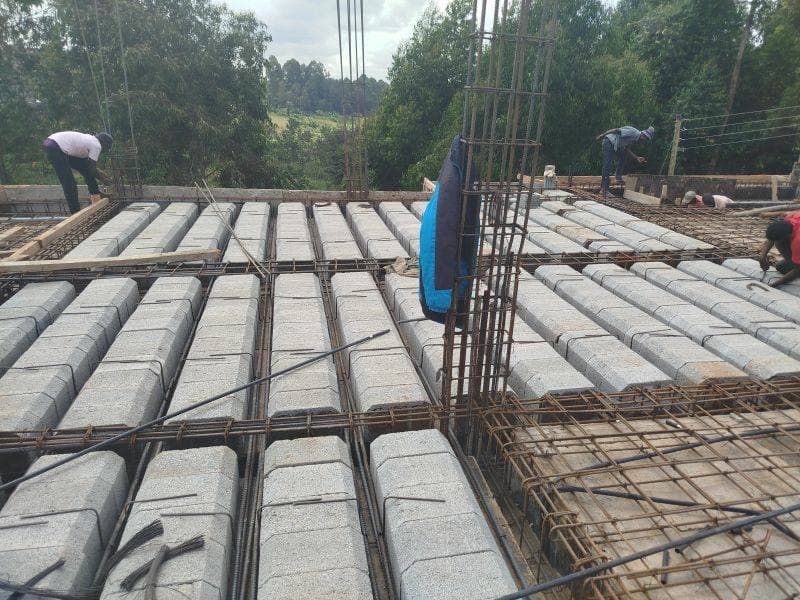
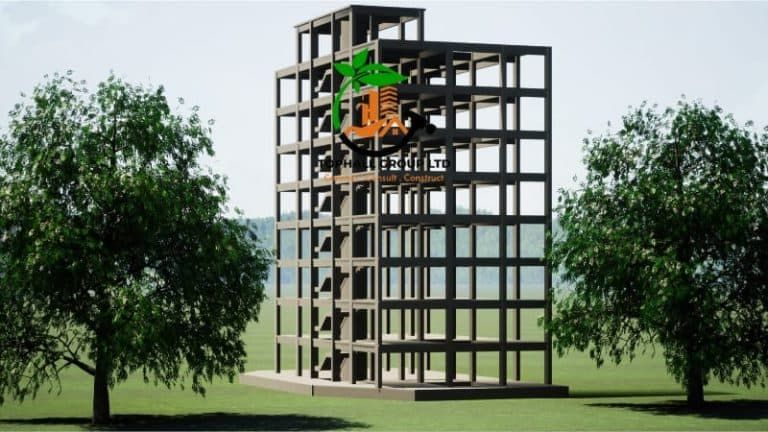
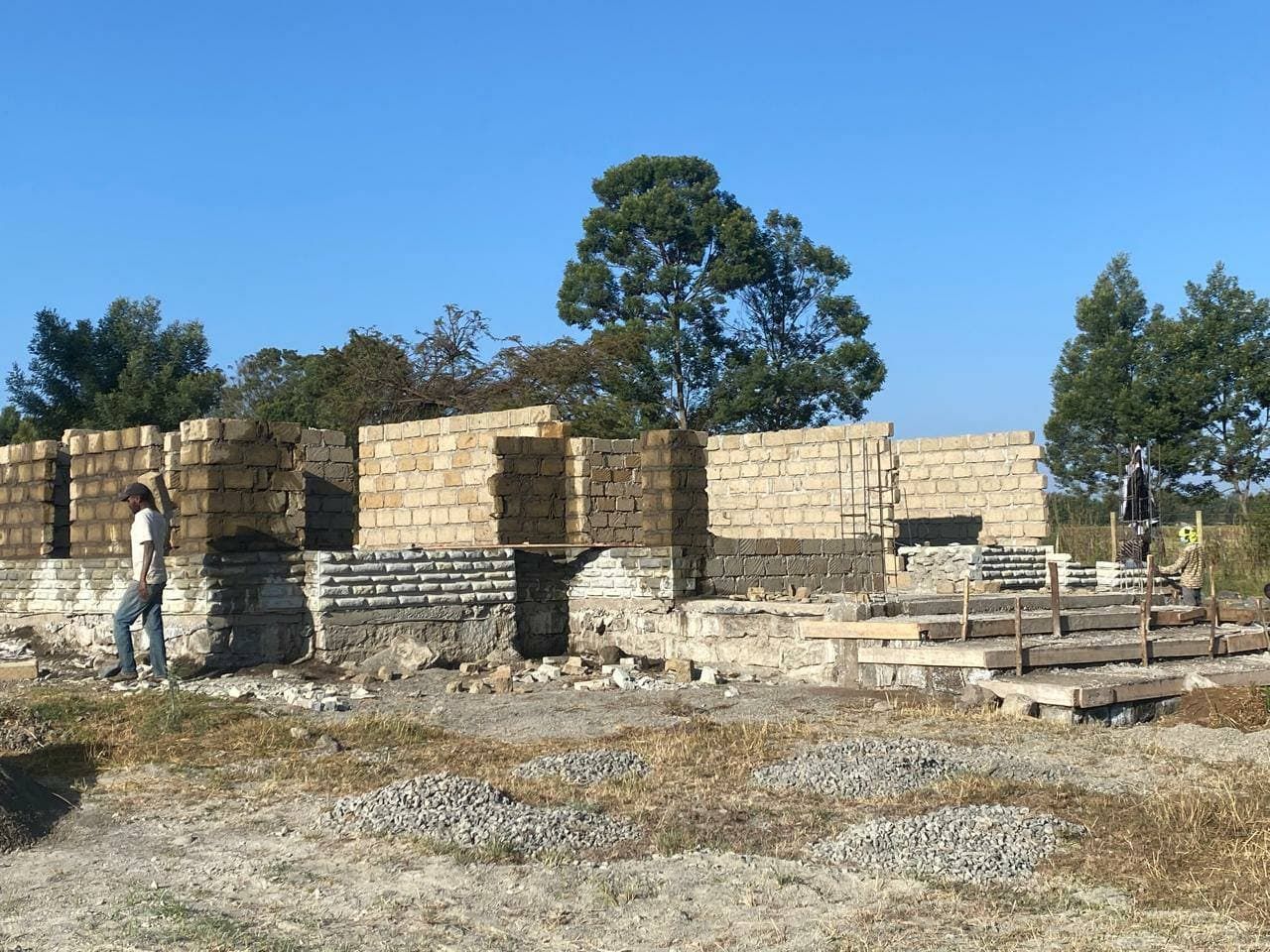
Photographs from TopHall sites, and design visualisations produced by our team. Each is captioned for what it is — no completed-project claims are made for work still in progress.
 Site photograph
Suspended slab at reinforcement stage — block and beam with mesh set out for inspection before the pour.
 Design visualisation
Multi-storey reinforced concrete frame, structural design visualisation.
 Site photograph
Superstructure rising off completed stone strip foundations.
Before you call
What commercial clients ask first
Do you handle design and construction, or only one of them?
Both. TopHall Group can take a commercial project from architectural and structural design through bill of quantities and procurement to construction and handover, or join at whichever stage you have already reached. Where a design is already complete, we price and build against it.
How do you control cost on a commercial build?
Costs are measured from drawings into a bill of quantities before the works are procured, and construction is priced against that bill rather than against an estimate. Variations are measured and agreed in writing as they arise, and spend against budget is reported on a fixed cycle, so the cost position is current rather than reconstructed at the end of the job.
Which approvals does a commercial development in Kenya need, and do you handle them?
A commercial development typically needs county planning and building approval, and an environmental impact assessment submitted to NEMA where the project triggers one. We prepare EIA project reports and environmental management plans in-house and produce the technical documentation for approval submissions, with the statutory sequence built into the construction programme rather than run as a separate exercise.
Planning a commercial project in Kenya?
Send us the scheme, the site and the budget range you are working to. You will get a considered response from an engineer, not a call-centre callback.
Prefer to talk now? Call +254 742 147 558.