
Site Management · Kenya
Building Project Management in Kenya
Day-to-day site management, staged inspections and written progress reporting — so a project you cannot attend daily is still a project you know the state of.
- Office hours, Nairobi
- Mon–Sat
- Engineering disciplines in-house
- 3
- Incorporated in Kenya
- Est. 2017
Request a site visit
Four fields. You'll hear back within one business day, from someone who can answer technical questions.
Registered and compliant with



The visibility problem
Most construction disputes are really information problems
Very few projects go wrong in a single dramatic moment. They go wrong gradually, in decisions taken on site by people who needed an answer that day and got it from whoever was nearest. Nobody was dishonest. The information simply never reached the person paying for it in time to matter.
That gap widens with distance. A site in Nakuru, a plot upcountry, or an owner who works full-time in Nairobi — all produce the same result: a site that is running on verbal decisions and a client who learns about them afterwards.
Site management is the discipline of closing that gap. Somebody technically qualified attends, checks, records and reports, on a schedule you can rely on, so the project is documented as it happens rather than reconstructed when there is an argument.
What weak site management costs
Five things that go undocumented until they cannot be fixed
Every one of them is cheap to record and expensive to reconstruct.
Verbal instructions nobody wrote down
A change agreed at the gate becomes a variation claim four months later with no record of what was actually asked for. Instructions go in writing, same day.
Work covered up before it was checked
Reinforcement, damp proofing and drainage get buried. Once they are, the only evidence they were done correctly is a photograph somebody remembered to take.
Materials delivered but not verified
Quantity and specification checked at delivery is the difference between paying for what arrived and paying for what was ordered.
Progress reported as a percentage
"About sixty percent" is not a measurement. Progress against a programme, with what is complete and what is outstanding, is.
Nobody comparing the site to the drawings
Dimensions drift. Openings move. Levels change. Someone has to be checking the building against the design while it is still being built.
What site management covers
What actually happens on a site visit
Scoped to the project — weekly attendance on a fast job, monthly on a slow one.
Site Attendance & Inspection
Scheduled visits with checks against the drawings and specification, and written sign-off at stages that get covered up.
Progress Reporting
A written report on a fixed cycle: what was done, what is outstanding, what is late and what is at risk. With photographs.
Measured Valuations
Payment certified against work actually measured on site, not against the invoice submitted.
Technical Queries
Structural and detailing questions answered by engineers while the site waits hours rather than weeks.
Drainage & Services Checks
Falls, invert levels, pipe runs and connections verified before they are covered.
How it runs
Setting up site management
Six steps, and you start receiving reports from the second week.
Project details
Where the site is, what stage it is at, who is building and what documents exist.
First site visit
A baseline record of what has actually been built, photographed and measured.
Agree the cycle
Visit frequency, report format, who receives it and what requires your decision rather than ours.
Set the controls
A written instruction procedure, an inspection checklist tied to the programme, and a valuation method.
Report and act
Scheduled attendance, written reports, and escalation the moment something threatens cost or programme.
Completion record
Snagging tracked to closure and a final documented record of the project handed to you.
Why TopHall
Reporting that is worth reading
A report you cannot act on is an expensive photograph album.
Written by engineers
The person on site can tell you whether a crack matters, whether the cover is adequate and whether a substitution is acceptable — not just that it happened.
Photographic record of covered work
Reinforcement, drainage and damp proofing photographed and dated before they disappear under concrete.
Valuations measured on site
Quantity surveying is one of our services, so payment follows measured work rather than a submitted claim.
Fixed reporting cycle
You know when the report arrives and what is in it. Nothing depends on you chasing for an update.
Independent of the contractor
Where we are not the builder, there is no valuation of ours to defend and nothing to soften in the report.
Our work
What gets recorded on site
Photographs from TopHall sites showing the stages a site report exists to capture. Each is captioned for what it is.
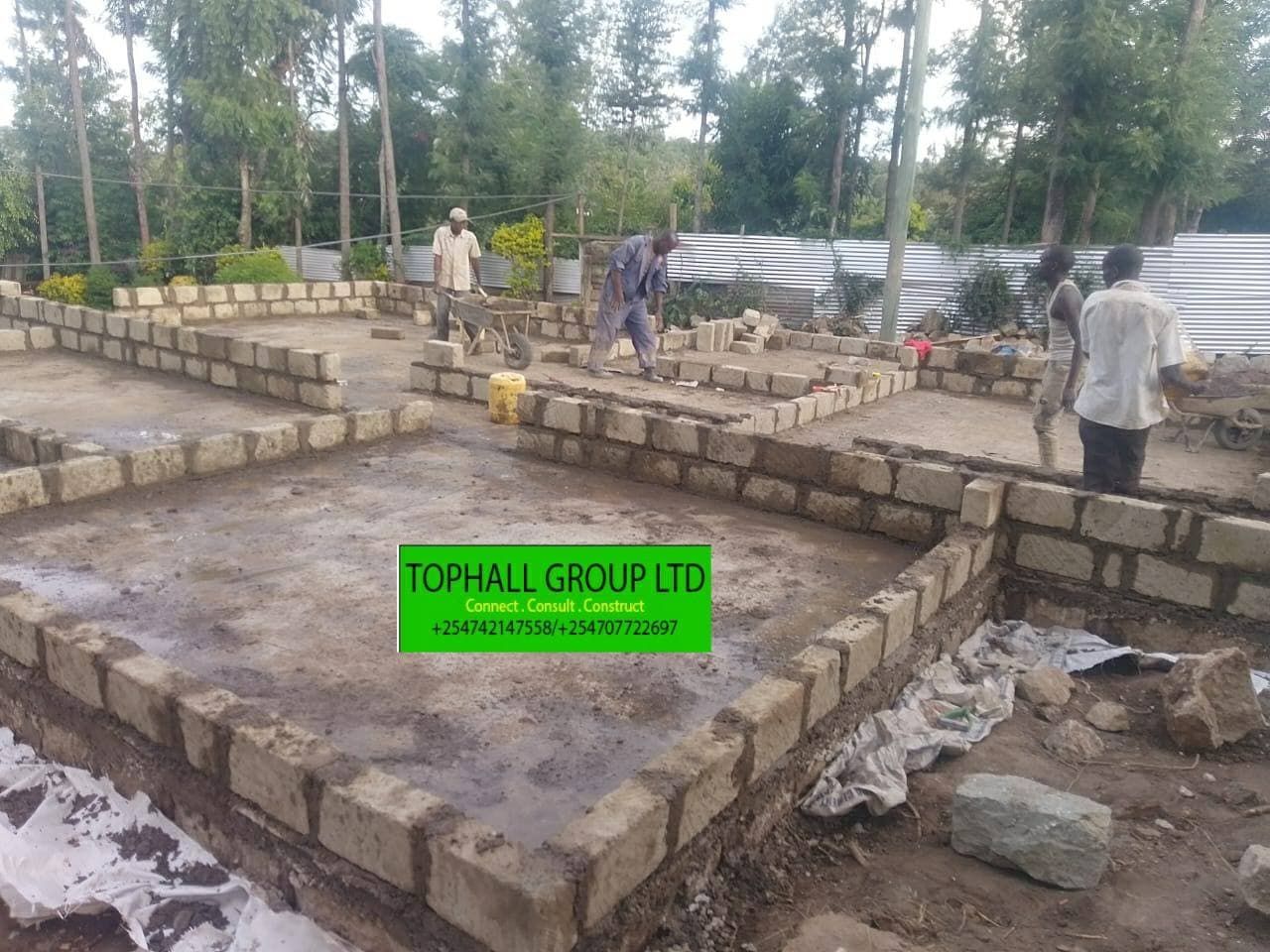 Site photograph
Foundations photographed and checked for line and level before backfilling covers them.
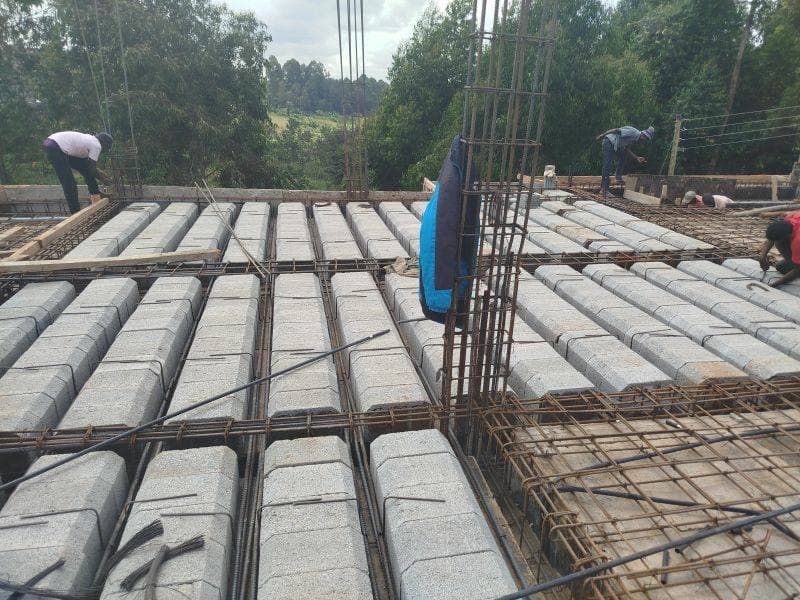 Site photograph
Slab reinforcement recorded and signed off before the pour — the last moment it can be inspected.
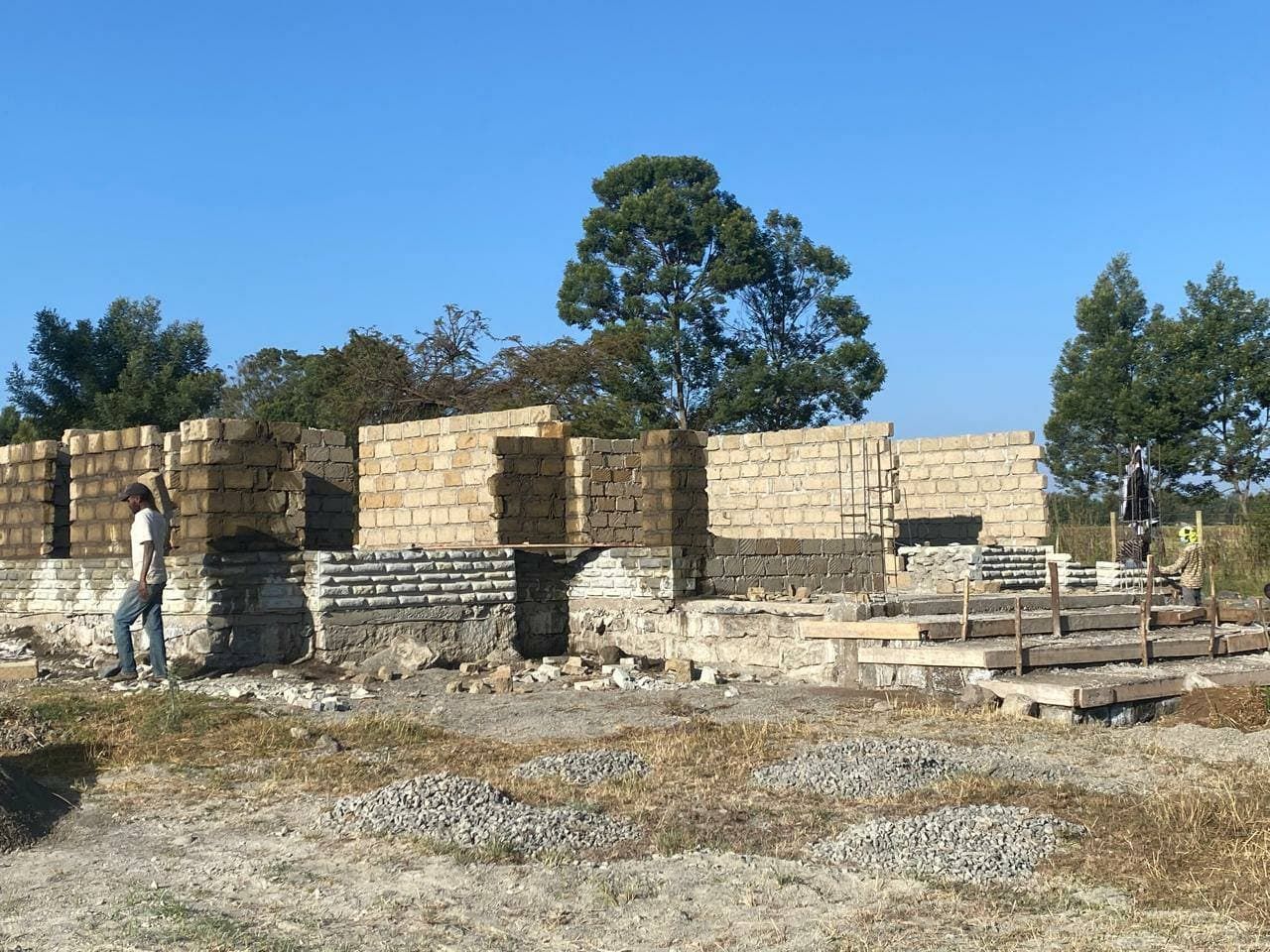 Site photograph
Superstructure progress, photographed against the programme.
Before you call
What owners ask about site management
How often would you visit the site?
It depends on what stage the works are at. During substructure and the structural frame there are specific moments that have to be inspected before they are covered, so attendance is tied to those rather than to a calendar. Through finishes a weekly or fortnightly visit is usually enough. We will propose a cycle based on your programme rather than selling you a fixed number of visits.
Do you manage projects outside Nairobi?
Yes. Site management is one of the appointments where distance is exactly the reason people need it. Travel is factored into the fee openly so you can see what the location costs, and for a site far from Nairobi we would normally propose fewer but longer visits timed around the inspection points that matter, rather than frequent short ones.
What is in the progress report?
What was completed since the last visit, what is outstanding against the programme, anything that failed an inspection and what was done about it, materials delivered and checked, instructions issued, and any risk to cost or programme with a recommendation. Photographs throughout, dated. It is written so that you can make a decision from it without needing to ask three follow-up questions.
Need eyes on a site you cannot attend?
Tell us where the project is and what stage it has reached. We will tell you what a reporting cycle would cost and what it would cover.
Prefer to talk now? Call +254 742 147 558.