
Building Remotely · Kenya
Build in Kenya From Abroad
What it actually takes to build at home while living overseas — the sequence, the costs, the approvals and the payment structure, explained before you commit to anything.
- Service lines under one contract
- 7
- Incorporated in Kenya
- Est. 2017
- Engineering disciplines in-house
- 3
Ask us anything
Four fields. You'll hear back within one business day, from someone who can answer technical questions.
Registered and compliant with



The practical picture
It is entirely doable. It is not the same as building here
Building in Kenya from abroad works when the project is set up to run without you and fails when it is set up to run with you at a distance. That is the whole difference, and it is a structural choice made at the beginning rather than a matter of how attentive you are.
A project designed to run without you has a design signed off before work starts, a measured budget, dated payment stages tied to completed work, an agreed reporting cycle, and one company responsible for delivery. A project designed to run with you at a distance has decisions queued up waiting for a reply from a different time zone, funds released against requests, and a supervision role quietly transferred to a relative.
None of this is exotic. It is how any properly run construction contract works. It simply matters more when you cannot drop by on a Saturday to see what is happening.
The practical obstacles
Five things that make remote building harder than it needs to be
Each has a straightforward structural answer.
Decisions that stall waiting for you
A project where site queries need your input weekly will lose days to time zones. Resolving the design fully before work starts removes most of them.
Paying for work nobody measured
Payments against requests rather than against measured completion is the root of nearly every diaspora horror story.
Approvals you cannot attend to
County submission and any environmental licensing need someone locally responsible with a date against it, not a task waiting for your next visit.
Plot issues discovered late
Boundaries, access, encroachment and title questions are far cheaper to establish before design than after mobilisation.
No agreed way of communicating
Without a fixed reporting cycle, updates become a function of who chases whom, and chasing from another continent is exhausting.
What we cover
The full sequence, handled locally
You approve; we execute and report.
Plot & Project Assessment
What your plot will support, what it will cost, and whether the budget and the brief can both be true.
Design & Engineering
Architectural and structural design resolved fully before construction, so site queries do not queue up in your inbox.
Measured Budget & Payment Stages
A bill of quantities and dated milestones, so funds are released against completed measured work.
Construction
The build itself, by the company that designed and priced it, under one contract.
Approvals & Reporting
County submissions handled locally, and dated photographic progress reports on a fixed cycle.
The sequence
Six stages, from overseas
Approximate durations given honestly at the start, including the parts outside our control.
Scheduled first call
In your time zone. What you want, where, and what you can spend.
Plot assessment
We attend the site: boundaries, access, slope, services and ground conditions, reported with photographs.
Design & costing
Drawings and a measured bill of quantities, reviewed with you by call before anything is approved.
Approvals
County submission prepared and lodged locally, carried as a dated item rather than an open task.
Construction & reporting
Works against the programme, with payment stages tied to measured completion and reports on a fixed cycle.
Handover
Snagging closed, services tested, documentation sent to you, and the house ready whenever you arrive.
Why TopHall
Built to run without you needing to be here
Which is what remote building actually requires.
Design resolved before construction
Fewer site queries means fewer decisions waiting on a reply from another continent, which is where remote projects lose time.
Payment against measured completion
Milestones tied to a bill of quantities, so releasing funds is a measurement rather than a judgement call.
Approvals owned locally
Submissions prepared and lodged by us as programmed items with dates, not left waiting for your next trip home.
One contract, one company
Design, costing and construction with a single registered firm you can hold to it — not a set of individuals coordinated remotely.
Reporting you do not have to chase
A fixed cycle agreed at the start, with dated photographs and a clear statement of what is outstanding.
Our work
What progress reporting looks like
Photographs from TopHall sites of the kind you would receive, plus a design visualisation by our team.
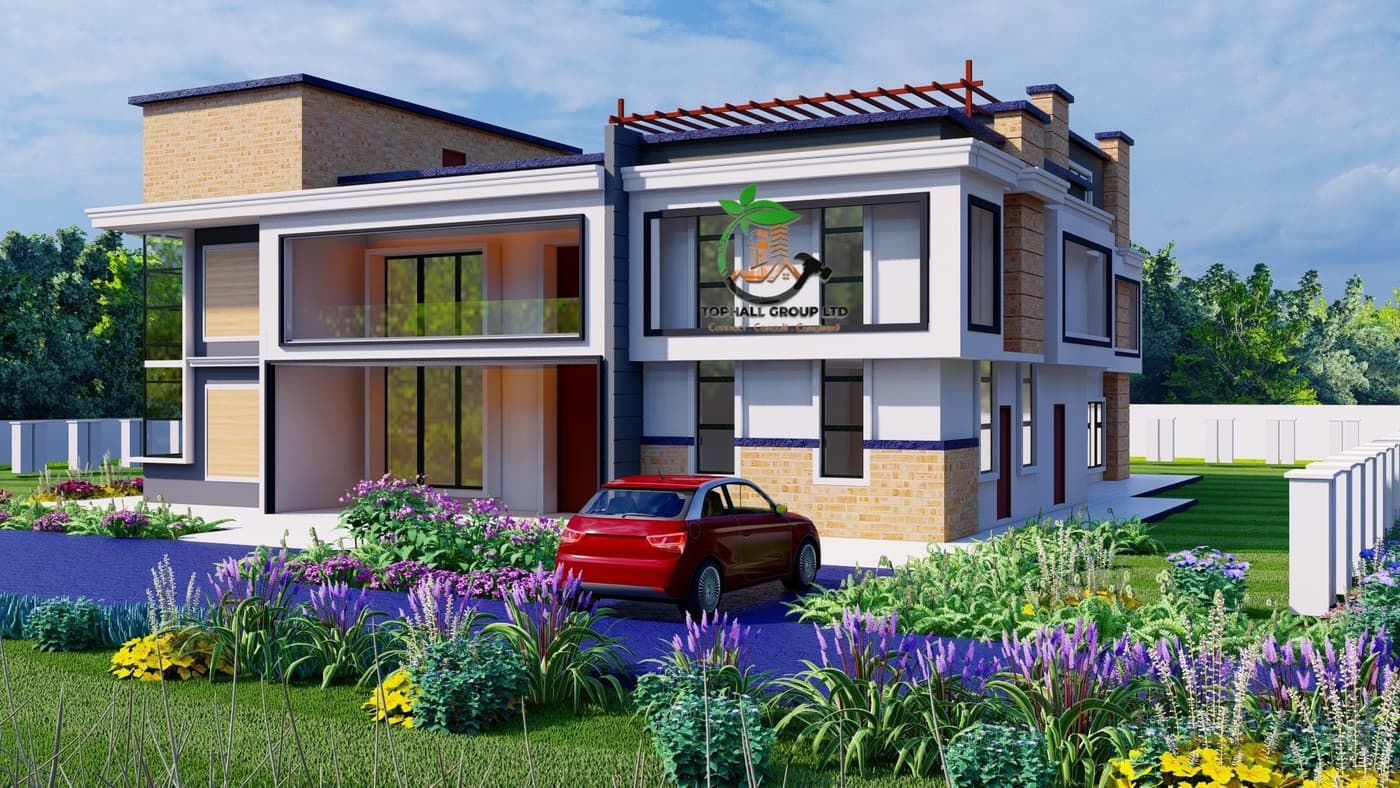 Design visualisation
Design stage: the scheme approved by call before any work begins.
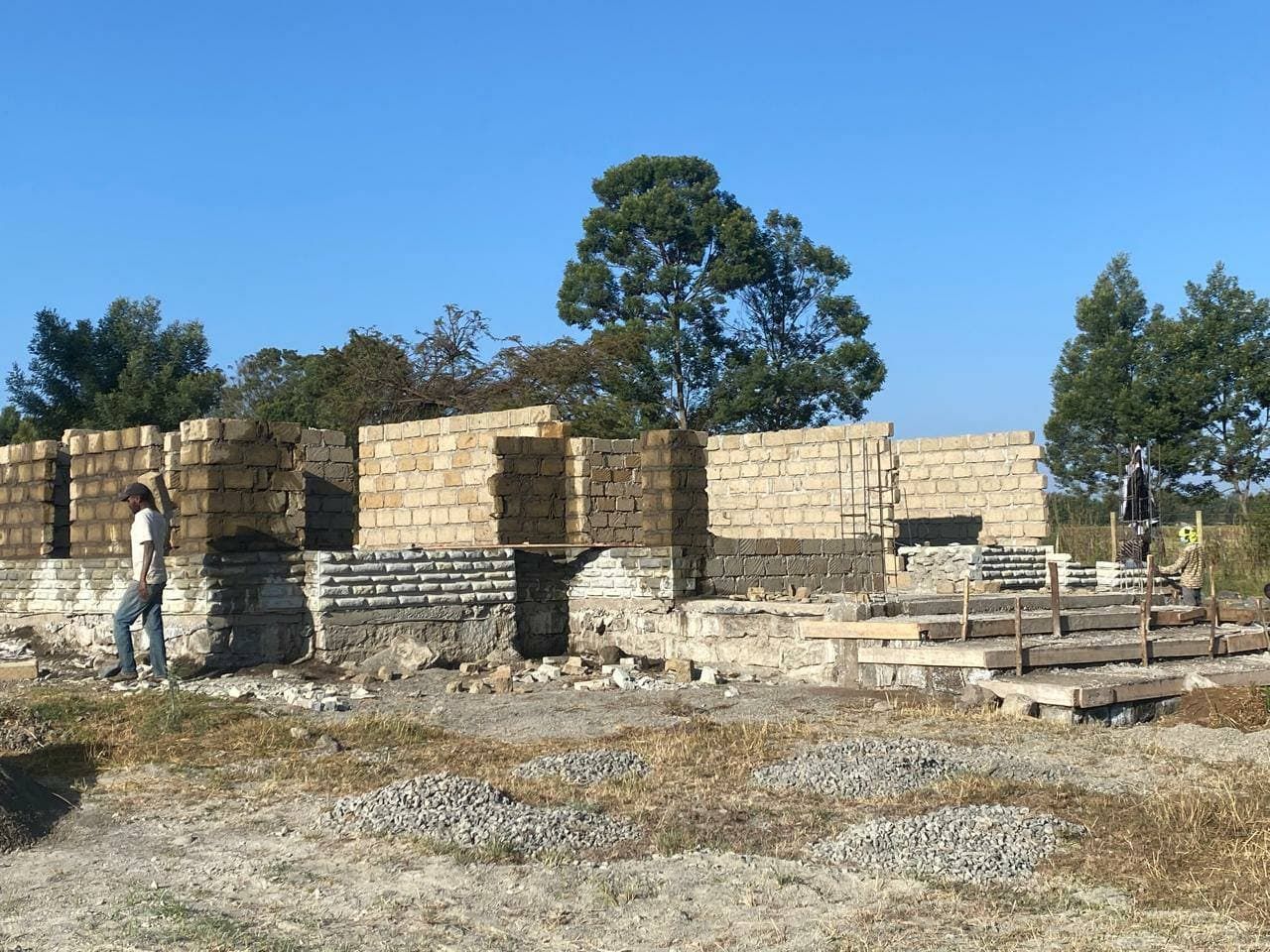 Site photograph
Superstructure rising off completed foundations, photographed against the programme.
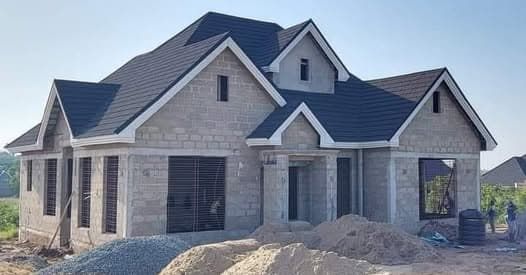 Site photograph
Roofing stage — a milestone tied to a measured payment release.
Before you call
The practical questions
How are payments structured if I am overseas?
Against dated milestones tied to measured completion, set out in the contract before work begins. Each stage corresponds to identifiable work in the bill of quantities, so a release is a measurement rather than a judgement about whether a request is reasonable. You are never in the position of being asked for money for a stage that cannot be shown to be complete.
How long does it take to build a house in Kenya?
For a typical family house, design and approvals usually take some months and construction a further several, with the total commonly running to somewhere over a year from first conversation to handover. The variables are the county approval timeline, which belongs to them, the rainy seasons, and how quickly decisions get made. We will give you a dated programme rather than a single optimistic figure, and tell you which parts we control.
Can I start while I am still saving for the full amount?
Often, yes, and it is worth planning deliberately rather than drifting into it. The sensible approach is to phase the work at natural stopping points — completing substructure, or getting the structure to roof and weathertight — rather than stopping mid-element. We can set the programme and the bill up that way from the start so each phase is a complete piece of work rather than an abandoned one.
Working out whether this is possible?
Ask us the practical questions before committing to anything. We will give you realistic costs, timescales and a clear sequence.
Prefer to talk now? Call +254 742 147 558.